
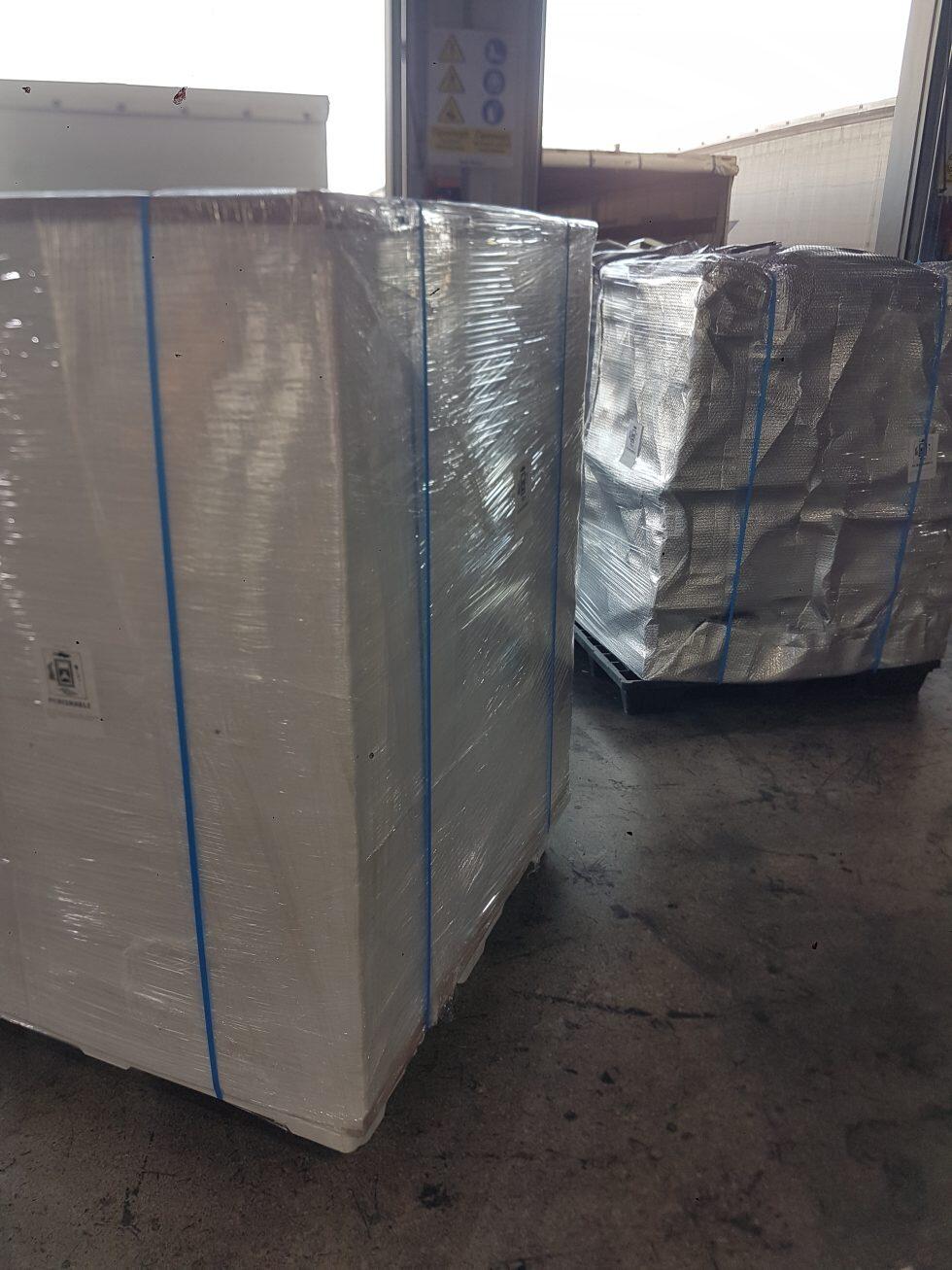
ColdShip PBX 11
As Though Your Goods Never Left the Refrigerator
Compared with heavy active temperature-control systems, the use of ColdShip PBX can significantly reduce transport-related CO₂ emissions. Its use of reusable gel packs instead of the dry ice commonly applied by other passive systems can deliver further substantial environmental savings.
ColdShip PBX is a lightweight EPS polystyrene pallet box featuring 5 cm of insulation. Combined with frozen gel packs, it independently maintains a controlled temperature range of 2–8°C for up to 1.17 cbm of cargo and for at least 3.5 days, even under the demanding summer temperatures of the Middle East.
By selecting a lightweight passive cold chain solution such as ColdShip PBX, shippers can reduce both air freight costs and the carbon footprint associated with transporting temperature-sensitive cargo.
Considerably Lower Tare Weight
Even the latest active air cargo container systems, with a maximum capacity of five pallets, may have a tare weight of approximately 1,100 kg.
By comparison, each ColdShip PBX unit has a maximum tare weight of only 55 kg per 120 × 100 cm pallet.
Transporting the same quantity of temperature-sensitive food or pharmaceutical cargo using five ColdShip PBX units would therefore result in a total tare weight of:
5 ColdShip PBX units × 55 kg = 275 kg
Compared with an active system weighing 1,100 kg, this represents a tare-weight reduction of 825 kg. As a result, the shipper is charged for 825 kg less air freight weight.
Lower Weight, Lower Fuel Consumption
The benefits of ColdShip PBX extend beyond the considerable reduction in freight costs. Lower transport weight also means less fuel is required, resulting in further reductions in CO₂ emissions.
It is estimated that transporting 1 kg of weight over 1,000 km requires approximately 0.5–0.6 kg of fuel.
For a typical flight of around 3,000 km, such as Athens to Dubai or Doha, choosing a heavy active system instead of ColdShip PBX could require approximately 1,237.5 litres of additional fuel, based on the following calculation:
0.5 × 825 × 3 = 1,237.5
This additional fuel consumption can be avoided simply by choosing a reliable passive cold chain system such as ColdShip PBX for the transportation of five pallets between Athens and Dubai.
Based on the stated fuel and emissions figures, the use of ColdShip PBX in this example could prevent approximately 2,750 kg of CO₂ from being released into the atmosphere.
Active systems also frequently require repositioning after delivery. ColdShip PBX does not require return transportation, meaning that the potential CO₂ savings may, in many cases, be even greater.
When these savings are multiplied across hundreds or thousands of pallets transported every week over longer international routes, the environmental impact becomes considerable. Wider use of ColdShip PBX can therefore contribute to emissions savings amounting to billions of tonnes of CO₂ annually.
EPS: Lightweight, Reusable and Recyclable
Expanded polystyrene, commonly known as EPS, consists of approximately 98% air, and no toxic substances are used during its manufacture.
When combined with reusable gel packs, EPS helps preserve food quality, reduce food waste and maintain the safety of temperature-sensitive products throughout transportation.
Life-cycle analyses have shown that EPS can have a considerably lower environmental impact than alternative materials used for the same purpose, making it a practical and environmentally responsible packaging solution.
ColdShip PBX pallet boxes can be reused repeatedly. Once they eventually reach the end of their usable life, their EPS material is 100% recyclable.
Gel Packs Instead of Dry Ice
The primary cooling element used in ColdShip PBX is frozen gel packs rather than dry ice.
Although the ColdShip PBX system is compatible with dry ice, GC Lymberpa SA prefers to use frozen gel packs whenever shipment requirements permit, as part of its commitment to more environmentally responsible logistics.
The use of gel packs produces no direct CO₂ emissions. By comparison, the production and use of every 1 kg of dry ice can add more than 1 litre of CO₂ to the environment.
Choosing gel packs instead of dry ice can therefore prevent thousands of metric tonnes of additional CO₂ emissions every year.
For environmentally certified companies, this also means avoiding the need to record the significant carbon emissions associated with dry ice within their environmental and carbon-footprint reporting.
Additional Benefits of Gel Packs
- Gel packs are more economical than dry ice.
- They are suitable for products that must remain within the 2–8°C temperature range.
- They do not freeze products that are intended to remain refrigerated.
- They are not classified as dangerous goods by IATA.
- They help prevent product deterioration caused by repeated freezing and defrosting.
- They can be reused repeatedly and are fully recyclable.
Dry ice, which is classified by IATA as dangerous goods, can freeze products that are intended to remain refrigerated rather than frozen. Repeatedly freezing and defrosting sensitive goods before returning them to refrigerated storage may negatively affect their quality and condition.
Gel packs avoid this risk while maintaining the required temperature throughout transportation.
All ColdShip PBX components and gel packs are fully recyclable. Before recycling becomes necessary, however, the complete ColdShip PBX system can be reused indefinitely.
ColdShip PBX
The sustainable cold chain system designed to maintain controlled temperatures throughout air freight transportation.